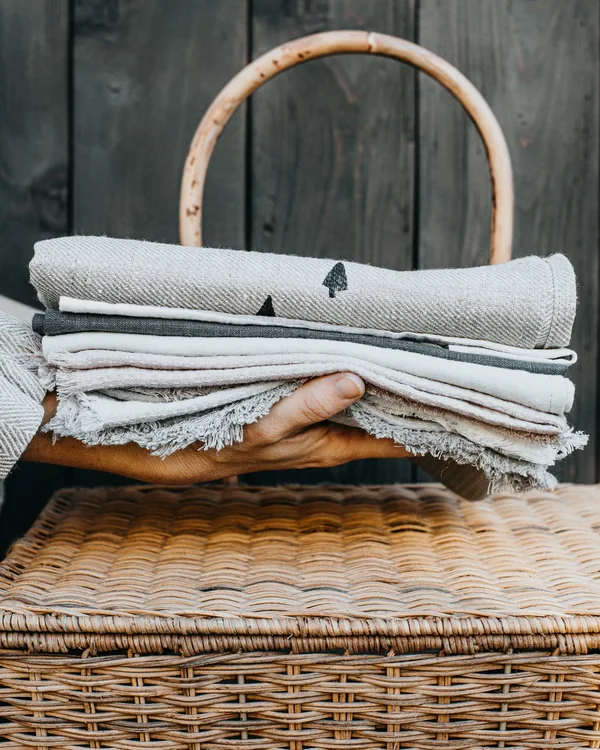
Store things where you naturally reach for them
Put regular items closest to where you use them. Give the bag you carry every day a predictable home near the door. Keep spare towels nearer the bathroom or in a single labelled shelf, so they don’t slowly take over bedroom drawers.
For a shared work and dining table, keep work essentials together in a portable container. Test whether the container is easy to lift and has a home when the table needs clearing.
Use deep, high and awkward spaces deliberately
Pull-out trays or open boxes can make deep cupboards easier to use. Try a box you already own before buying a whole matching set. Keep seldom-used, lightweight items on higher shelves and frequently used or heavier items at a more comfortable height.
Under-bed storage can work for spare bedding or seasonal clothes. Measure the actual clearance and make sure you can pull the container fully out without moving other furniture.
Measure access as well as capacity
Write down the width, depth and height of the usable space, including hinges, handles and skirting. Test how far doors or drawers can open. If you rent, check what your agreement allows before fixing anything to walls.
- Start with the hall, kitchen worktop or other daily pinch point.
- Put like items together and decide how much you need to keep at hand.
- Try the arrangement for a week before paying for extra furniture or boxes.