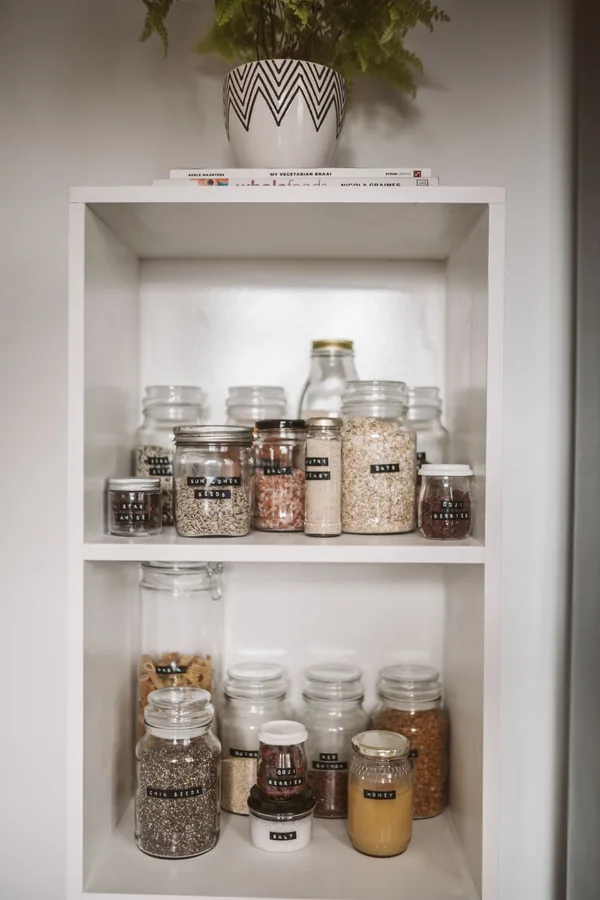
Sort one shelf and check what’s already open
Start with a shelf you use often. Group what’s on it into categories that suit your household, such as breakfasts, quick dinners, baking and snacks. Put open packs where you can see them and keep unopened spares behind them or on a separate shelf.
Keep the packaging information you need, including dates, ingredients, allergens and storage directions. If you move a dry ingredient into a container, keep the relevant label and follow the original storage instructions.
Arrange categories for how you cook and shop
Store a set of ingredients together when you use them for the same meal. That may be oats and toppings for breakfast or noodles and sauces for a quick dinner. Give each category a clear edge, such as a tray or the side of a shelf, so new shopping has somewhere to go.
Measure a shelf before buying jars. Keeping products in their original packets is often the quickest setup, especially for things you don’t use often.
Build a quick stock check into shopping
Before you shop, look at the open packs and the areas with spare stock. Pick a few ingredients to use in the coming week. When you put the new shop away, bring older packs forwards and keep similar items together.
- Put regular ingredients at a comfortable height.
- Make open packets and duplicate items easy to see.
- Keep dates and storage instructions available when you decant anything.